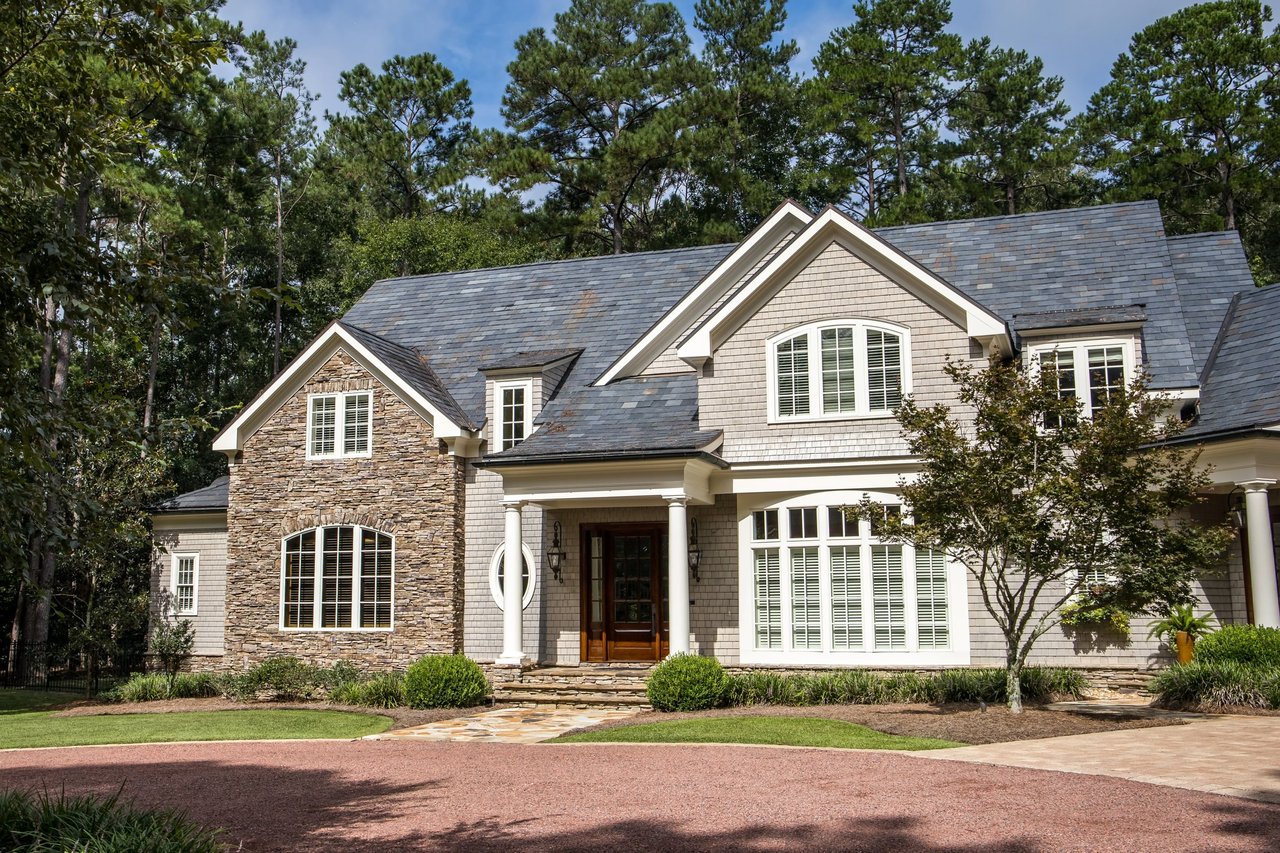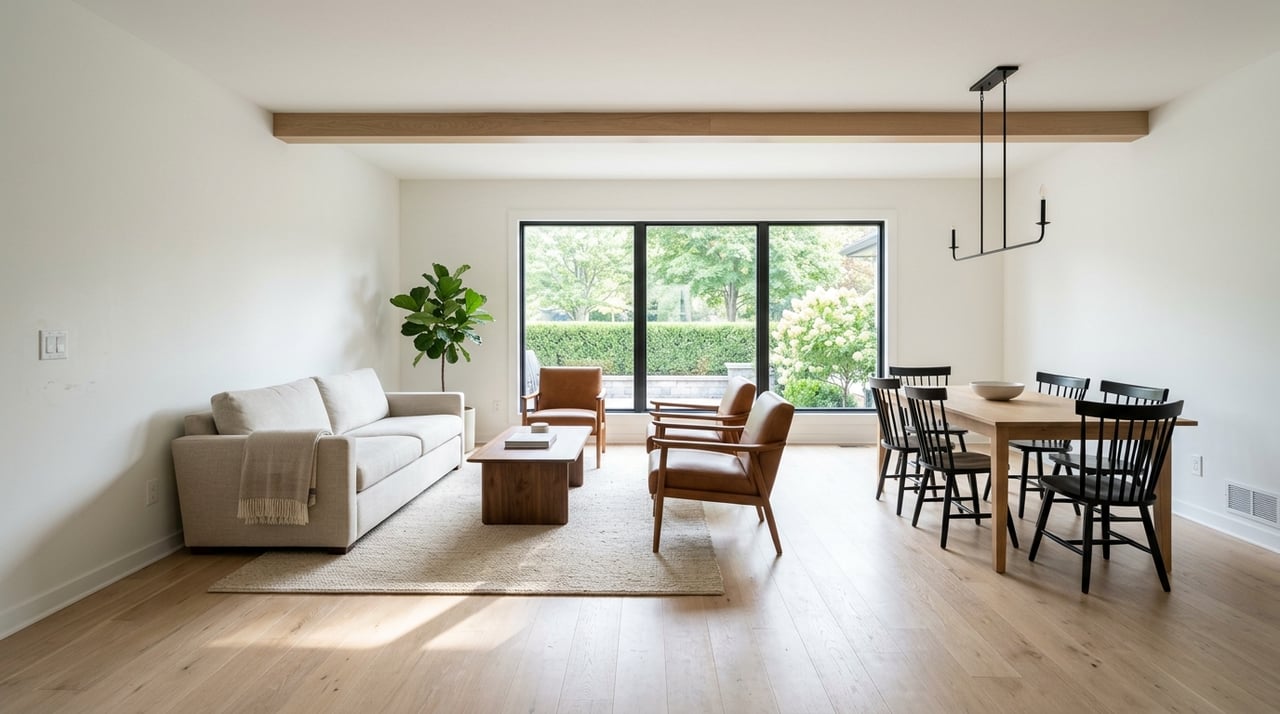
If you are thinking about selling in West Chester, one question matters more than almost anything else: How do you price your home so it stands out without leaving money on the table? In a market where buyers still move quickly but have more choices than they did at peak speed, the answer is not guesswork. It takes local data, sharp positioning, and a clear story about why your home deserves attention. Let’s dive in.
Why pricing matters in West Chester
West Chester is a large suburban market with strong demand drivers. The township has more than 64,000 residents, more than 3,600 businesses, and a location along the I-75 corridor between Cincinnati and Dayton. With six interstate interchanges and access to two international airports within about an hour, it continues to attract commuters, relocators, and move-up buyers.
That demand is real, but it does not mean every listing can name any price and expect results. In 2025, West Chester recorded 1,006 new listings and 806 sold listings, with a median selling price of $425,000 and median days on market of 13. More recent 2026 snapshots still show a competitive market, but they also suggest that buyers are noticing pricing mistakes faster.
Current trackers place West Chester in the low-to-mid $400,000s. Redfin reported an April 2026 median sale price of $434,775 and a 98.8% sale-to-list ratio, while Realtor.com showed a $445,000 median listing price and a $432,450 median sold price. The takeaway is simple: buyers are paying close to asking when the price makes sense.
How we price a West Chester home
Start with the closest sold homes
The most reliable pricing story begins with a tight, neighborhood-specific comparative market analysis, or CMA. That means looking first at recent sold homes that are as close as possible in location, size, style, age, and condition. In West Chester, broad township averages can point you in the right direction, but they should not set the final number on their own.
Micro-markets inside the township behave differently. For example, Realtor.com snapshots showed Tylersville at a $407,450 median listing price and Bethany at $395,000, with Bethany taking longer to sell. That kind of variation is why a comp from across West Chester may be less useful than a comp from your own subdivision or nearby streets.
Adjust for updates and condition
West Chester’s housing stock is mostly detached suburban homes, and many were built between the 1970s and 1990s. The median age of homes is 39.4 years, with large build-era groups from 1980 to 1999. That means many sellers are not competing against brand-new construction. They are competing on how well the home has been maintained, updated, and presented.
A kitchen refresh, updated baths, flooring, paint, windows, roof condition, and mechanical systems can all affect buyer response. Buyers often compare two homes with similar square footage and choose the one that feels easier to move into. Pricing has to reflect that reality.
Use price per square foot carefully
Price per square foot can help as a quick check, especially when comparing homes outside the immediate subdivision. Current benchmarks in West Chester run roughly from $186 to $198 per square foot, depending on the source and time window. That can help confirm whether a proposed list price is in the right range.
Still, price per square foot is not the whole story. A larger lot, better layout, stronger finish quality, more recent updates, or a more convenient location can all justify differences. We use it as one tool, not the final answer.
Match the price to buyer behavior
West Chester is competitive, but it is also selective. Redfin still classifies the market as very competitive, yet it also reports a 25.6% price-drop share. That combination tells you something important: buyers are active, but they are not blindly chasing every listing.
When a home launches close to market reality, it can attract strong early attention. When it overshoots, buyers may pause, compare, and wait. That can lead to fewer showings, longer market time, and price reductions that weaken momentum.
How we position a West Chester home
Pricing gets buyers in the door. Positioning gives them a reason to care.
In West Chester, good positioning starts with understanding what kind of home you have and which buyers are most likely to respond. Since 71.6% of housing units are detached homes, much of the market is centered on suburban single-family living. But even within that broad category, the message should change based on the home itself.
Detached homes need a lifestyle story
For detached family homes, the strongest positioning usually highlights practical daily-life benefits. That can include layout, yard space, storage, home office flexibility, commute convenience, and access to the Lakota Local Schools district, which serves West Chester and Liberty townships and operates 23 school buildings.
The goal is not to make vague claims. It is to help buyers understand how the home functions in real life. If the kitchen opens to the family room, the backyard is easy to maintain, or the floor plan offers flexible living space, those details should shape the marketing story.
Lower-maintenance homes need clarity
Attached or lower-maintenance homes appeal to a different buyer mindset. In those cases, positioning should focus on ease, efficiency, and total monthly cost. Buyers in this segment often want simplicity and predictable upkeep more than a long list of cosmetic features.
That story needs to be clear from the beginning. If the home offers a convenient location, easy living, and a practical layout, the marketing should say so in a direct and polished way.
Premium homes need a curated approach
Higher-end homes in West Chester sit in a smaller slice of the market. In the township’s housing profile, only a small percentage of owner-occupied homes fall above $500,000, and an even smaller share reaches $750,000 or more. That means premium listings are less about fitting into a crowded middle and more about presenting rarity.
For these homes, positioning should emphasize lot quality, privacy, finish level, architecture, updates, and any hard-to-find features. Buyers at this level often respond to a more curated narrative and polished presentation. The story has to feel intentional, not generic.
Why preparation affects price
In a market with many comparable options, preparation supports pricing power. West Chester’s Community Development Department handles zoning, permits, property uses, and the property maintenance code. That means visible deferred maintenance, exterior condition, and permit history can all shape buyer confidence.
A clean, well-documented home is easier to price and defend. If buyers see peeling trim, worn exterior elements, or signs of unfinished work, they may assume there are larger issues behind the scenes. Even when the home is fundamentally solid, those details can weaken your position.
Before listing, it helps to review:
- Exterior condition and curb appeal
- Minor repairs and deferred maintenance
- Paint, flooring, and lighting updates
- Permit history for major improvements
- Service records for key systems when available
- Decluttering and staging for photography and showings
These steps do not change the market, but they can change how your home competes within it.
What West Chester sellers should remember
Most West Chester homes compete in the mid-market. The township’s housing value distribution shows a large share of owner-occupied homes concentrated between roughly $200,000 and $399,999, with fewer homes in the upper price tiers. That makes strategy especially important if your home sits near the center of the market, where buyers have the most choices.
In a crowded segment, small differences matter. Condition, presentation, pricing accuracy, and neighborhood-specific comps can shape whether your home gets early momentum or sits while buyers compare other options.
The good news is that West Chester still offers strong fundamentals. The area’s location, commuter convenience, established neighborhoods, and professional buyer base continue to support demand. Sellers who pair realistic pricing with thoughtful positioning can still stand out.
That is where a hands-on strategy helps most. When your pricing is grounded in recent sold data and your marketing tells the right story for your home, you give buyers a reason to act with confidence.
If you are wondering how your home would be priced and positioned in today’s market, The Parchman Group can help you build a strategy around your neighborhood, your timeline, and your home’s unique strengths.
FAQs
How local should comps be for pricing a home in West Chester?
- Very local comps are best. West Chester micro-markets can vary in price and pace, so nearby sold homes in a similar setting are usually more useful than township-wide averages.
Is the West Chester housing market still moving quickly?
- Yes, but it is more selective than peak 2025 conditions. Recent reports show median days on market ranging from the mid-20s to longer rolling averages, which means buyers are active but more price-sensitive.
What types of homes are most common in West Chester?
- Detached homes are the most common. About 71.6% of housing units are detached, which is why many listings compete on layout, updates, condition, and presentation.
What price range is most common for West Chester homes?
- Much of the owner-occupied housing stock falls in the mid-market, especially between about $200,000 and $399,999. That creates strong competition in the middle of the market.
Why do some West Chester homes need price reductions?
- Current data suggests buyers still respond well to realistic pricing, but they hesitate when a home is priced above market expectations. Condition, updates, and neighborhood differences also play a role.
How should a premium West Chester home be positioned?
- Premium homes usually need a more curated presentation that highlights rarity, lot quality, privacy, finish level, and standout features rather than relying on broad market averages alone.